
Active Array Antenna Thermal Management: Power, Heat and RF Performance
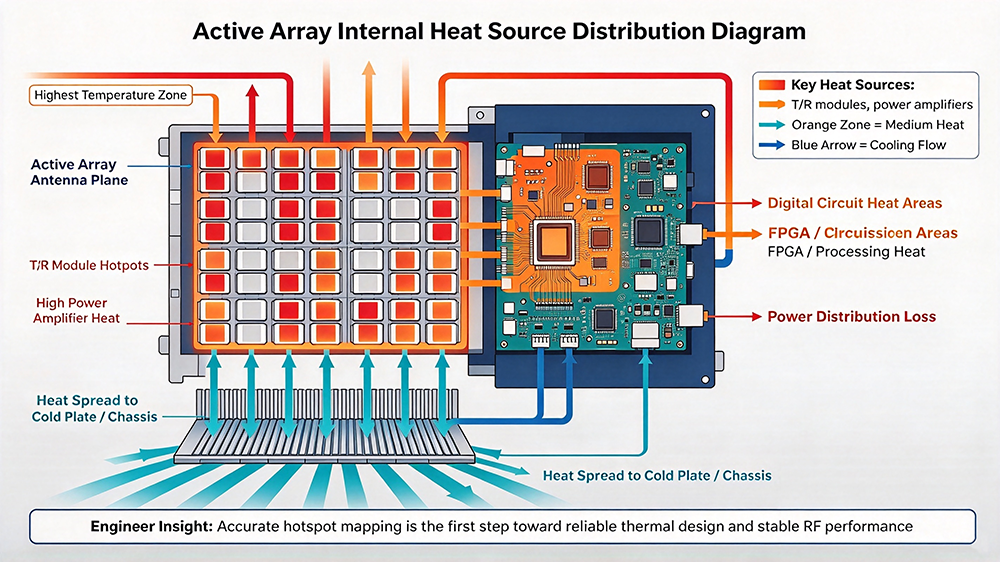
Active phased array antennas are inherently heat-intensive electronic systems. Unlike passive antenna hardware that generates negligible power loss during operation, modern active arrays integrate dense arrays of compound semiconductor T/R modules, high-speed beamforming processing units, and multi-channel power supply circuits. Every watt of radiated RF power corresponds to multiple watts of DC power consumption and […]
Active Array Antenna Calibration: Why It Matters and How It Works
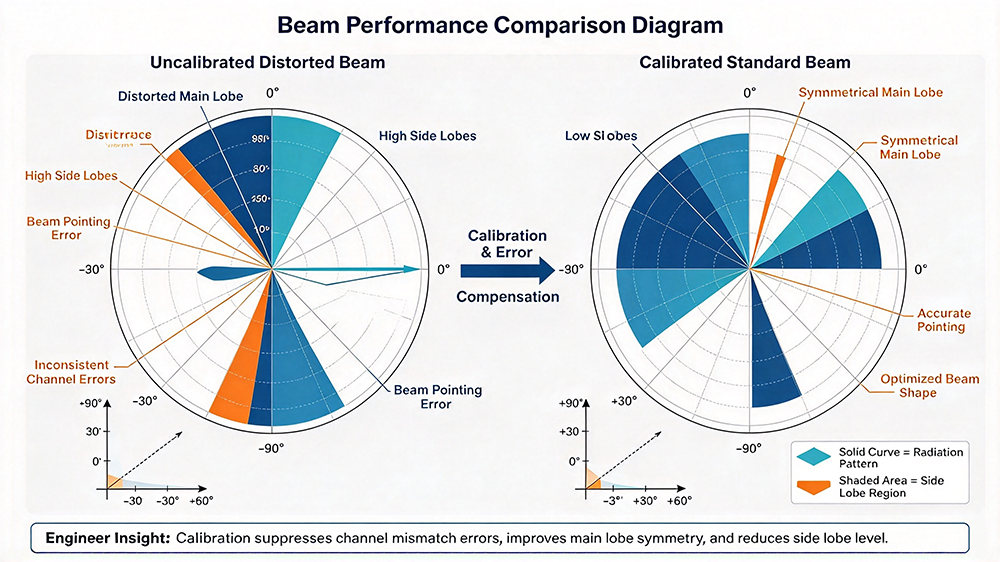
Active phased array antennas have evolved into the core hardware foundation of modern high-end wireless systems, powering LEO satellite communication terminals, 6G massive MIMO infrastructures, and high-precision beam scanning devices. Unlike passive arrays that rely on fixed feed networks and unified signal distribution, active arrays depend on hundreds of independent T/R channels to complete beamforming, […]
Active Array Scan Angle and Scan Loss: What Determines Wide-Angle Beam Steering?
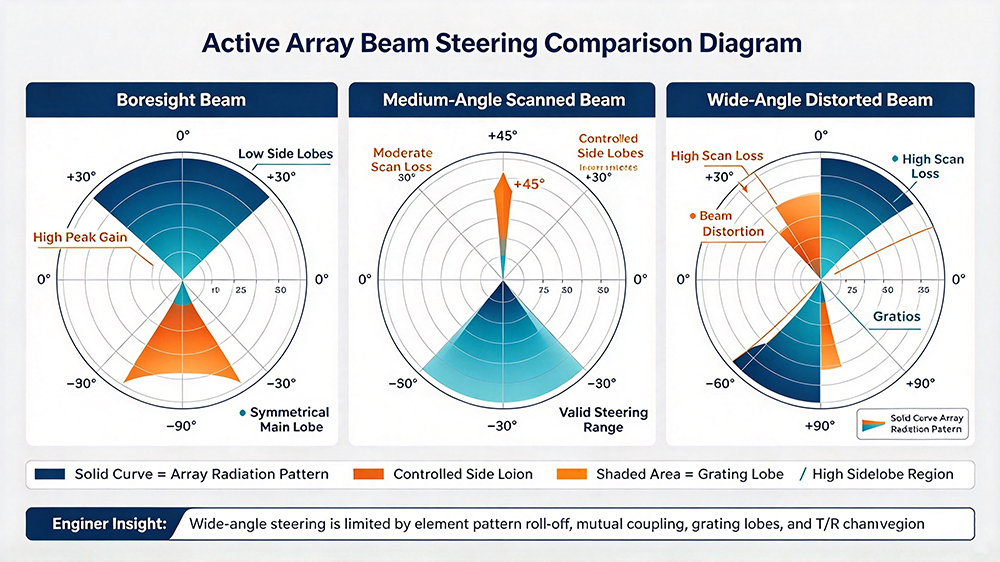
Wide-angle beam steering defines the core application value of active phased array antennas, enabling dynamic directional coverage for LEO satellite terminals, 6G massive MIMO systems, and high-end wireless scanning platforms. While many engineers focus on peak gain, bandwidth, and channel consistency during array design, scan angle limitations and scan-induced gain loss are often the hidden […]
Active Array Antenna Architecture: Elements, T/R Modules, Beamforming and Control
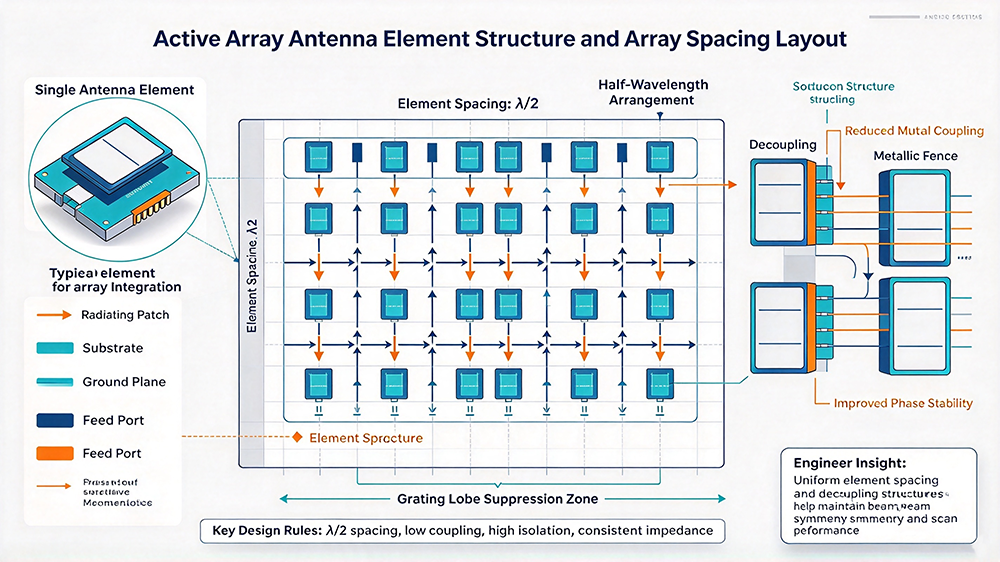
Active array antennas have become the foundational hardware backbone of modern high-end wireless systems, powering 6G massive MIMO networks, LEO satellite communication terminals, and high-precision scanning detection equipment. Unlike passive array solutions that rely on centralized signal transmission and fixed feed networks, active arrays adopt a fully distributed architecture. Every antenna unit is paired with […]
How Are Phased Array Antennas Tested? Full Engineering Test Procedures & Key Metrics
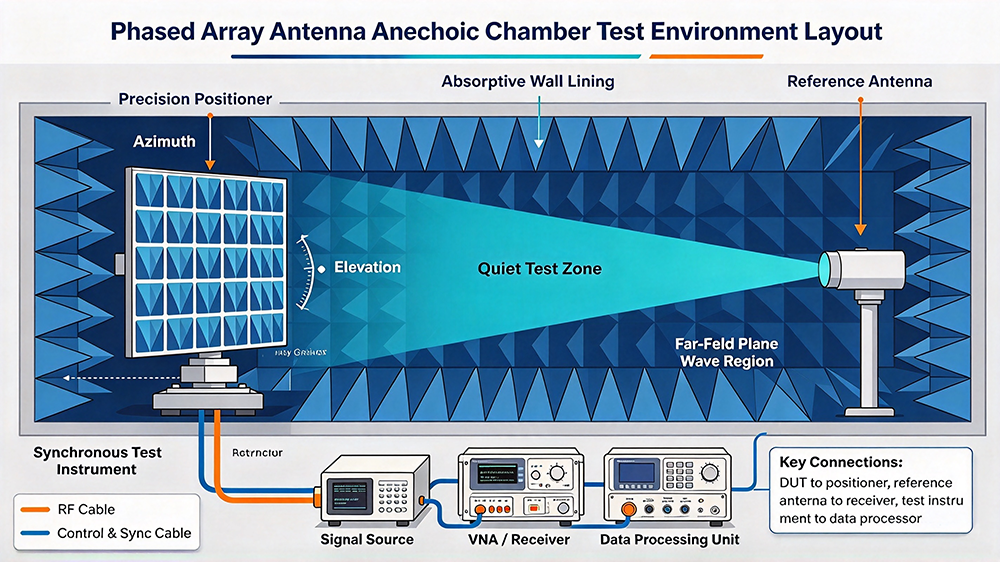
Phased array antennas have redefined the performance boundaries of modern wireless infrastructure, ranging from 6G massive MIMO base stations and low-earth orbit (LEO) satellite terminals to high-end beam-tracking detection systems. Unlike traditional fixed-beam single antennas, phased arrays rely on multi-channel compound semiconductor transceivers, real-time phase calibration, and digital beamforming algorithms to deliver electronic scanning, multi-beam […]
How Is Antenna Gain Measured? Principles, Test Methods, and Standard Engineering Workflows
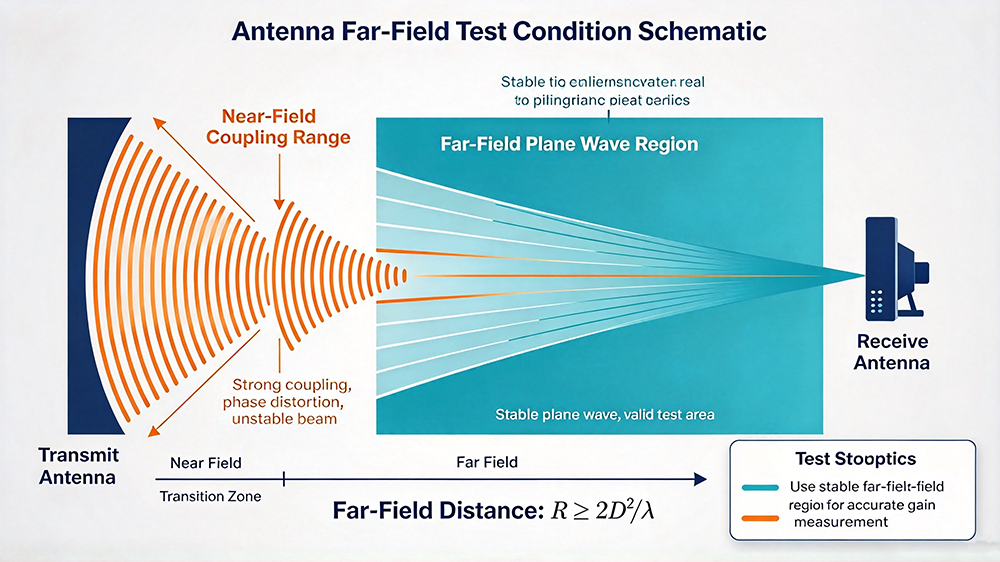
Antenna gain is arguably the most misunderstood yet critically important performance metric in modern RF and wireless system design. Unlike intuitive specifications such as size, weight, or operating frequency, antenna gain does not represent signal amplification through active energy conversion. Instead, it quantifies an antenna’s ability to concentrate radiated electromagnetic energy into a targeted direction, […]
How Is RF Output Power Measured? Units, Test Methods, and Engineering Best Practices
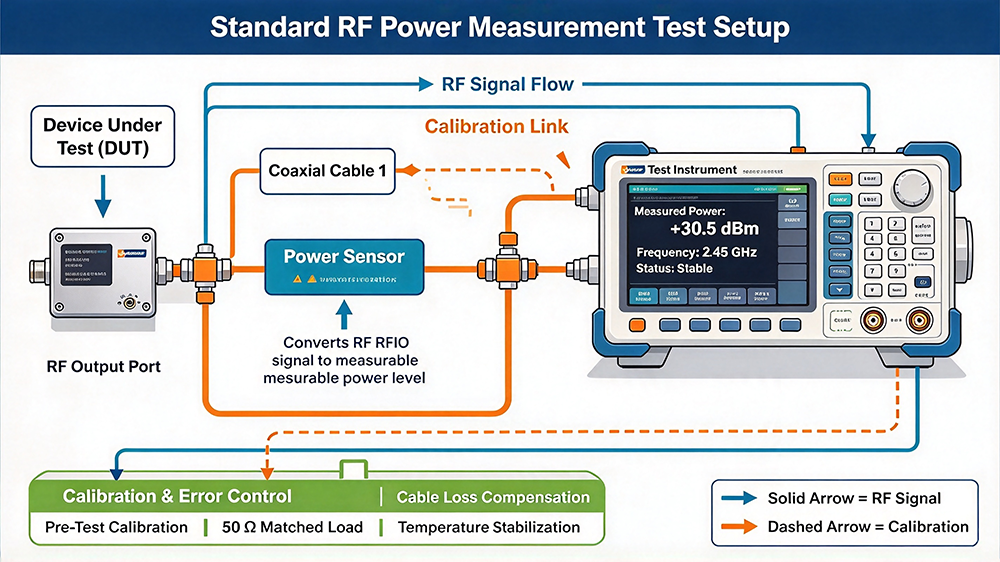
RF output power stands as one of the most fundamental and non-negotiable performance indicators for every wireless and microwave system. Whether engineers are validating compound semiconductor amplifier performance, calibrating phased array antenna channels, debugging satellite communication terminals, or verifying 6G base station signal stability, accurate RF power measurement serves as the core basis for performance […]
How Do Phased Array Antennas Enable LEO Satellite Terminals?
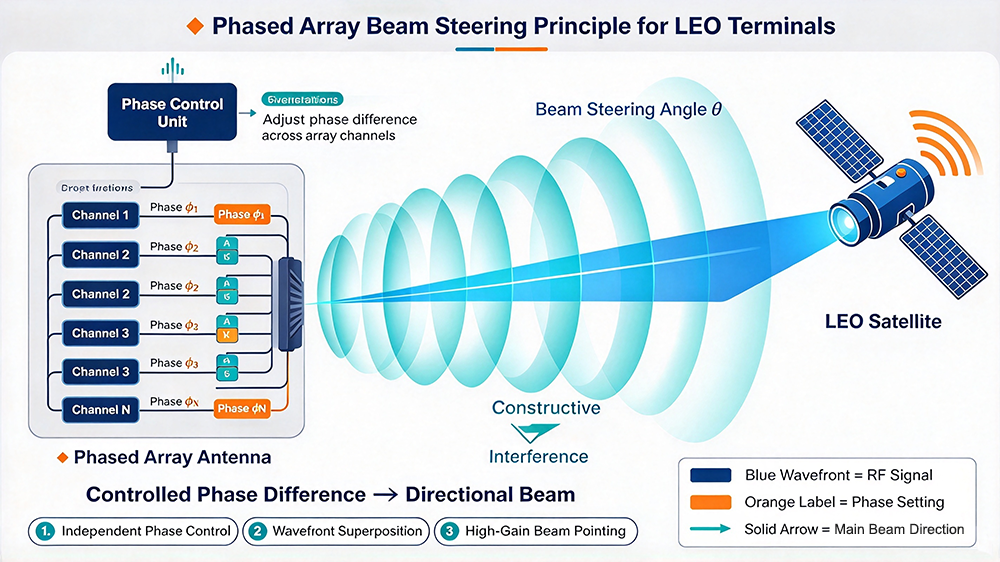
Low Earth Orbit (LEO) satellite constellations have redefined global wireless connectivity, delivering low-latency, high-bandwidth, and full-earth coverage communication services that traditional geostationary (GEO) satellites cannot match. Unlike static GEO satellite systems that remain fixed relative to ground stations, LEO satellites travel at extreme orbital speeds, completing full orbital rotations in roughly 90 to 120 minutes. […]
How Does a Solid-State Power Amplifier Work? Full Working Mechanism & Technical Breakdown
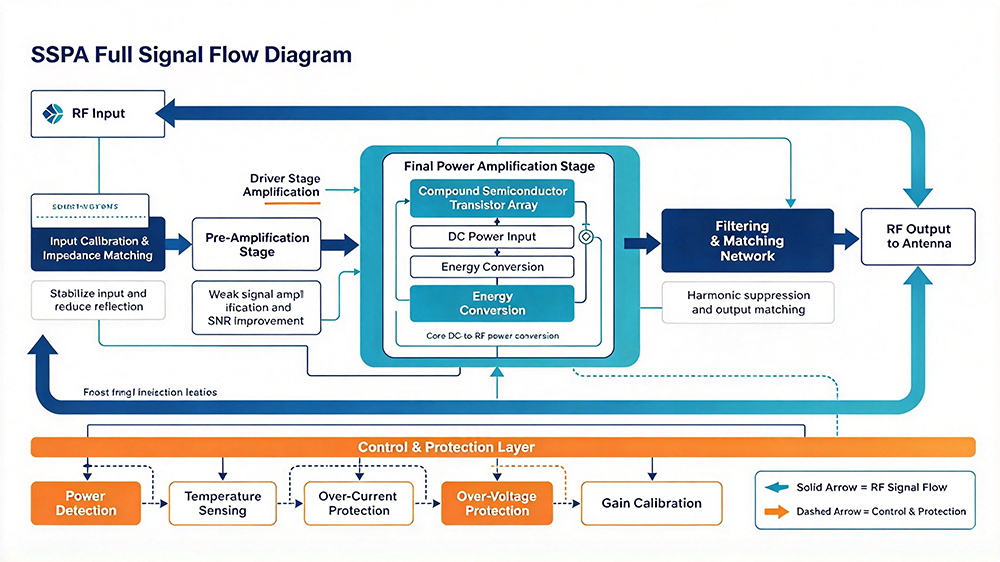
Modern high-frequency wireless systems—from 6G massive MIMO base stations and orbital satellite communication payloads to high-end phased array detection hardware—rely on consistent, high-purity RF signal amplification to deliver stable long-range transmission. For decades, vacuum tube amplifiers dominated high-power RF scenarios, yet their reliance on thermal filament heating and high-voltage vacuum electron movement created inherent flaws: […]